TB-500: Complete Research Guide
A synthetic version of Thymosin Beta-4, a naturally occurring protein central to tissue repair, cell migration, and angiogenesis. Widely researched for accelerated healing.
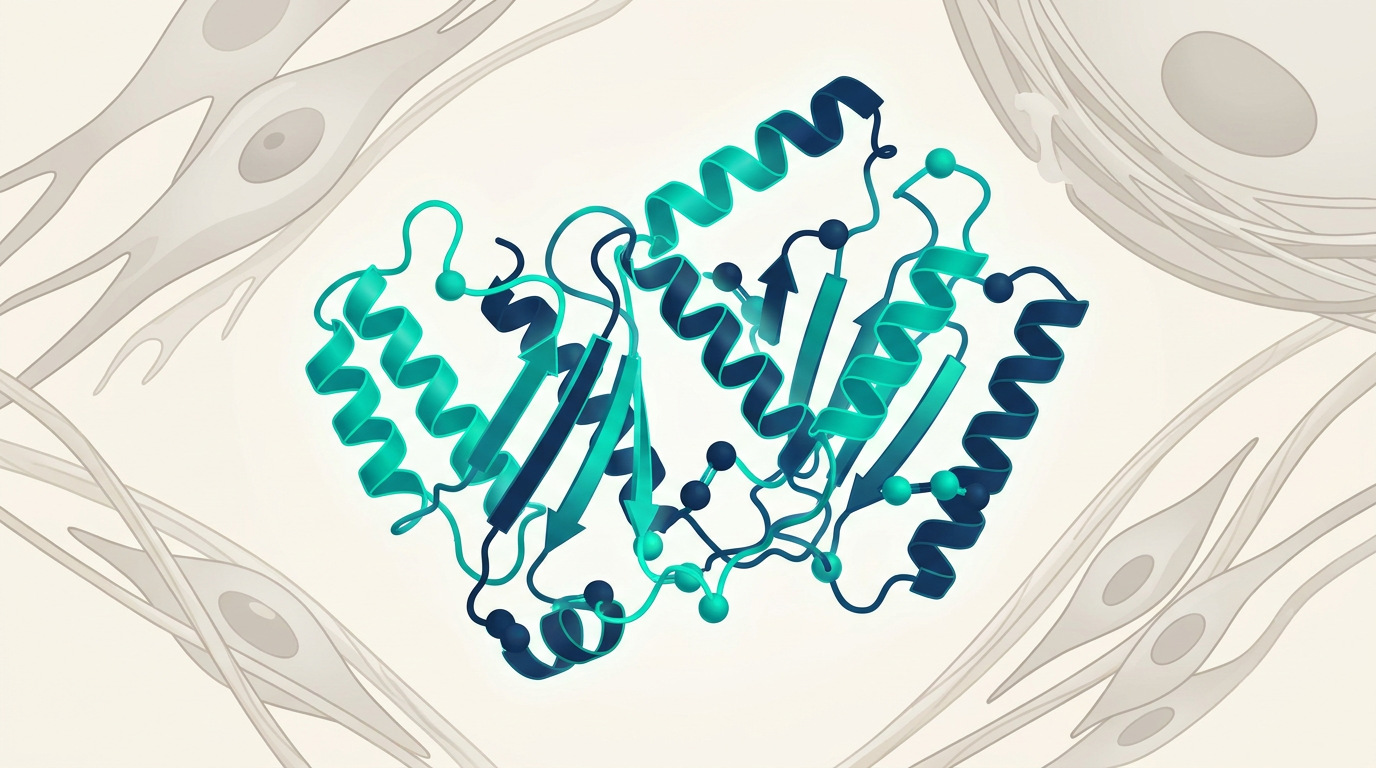
TB-500 is the synthetic version of a naturally occurring peptide fragment of Thymosin Beta-4 (Tβ4), a protein found in virtually all human and animal cells. Tβ4 is a key regulator of actin, a protein fundamental to cell structure and movement, and plays a vital role in tissue repair, regeneration, and wound healing.
Researchers study TB-500 to investigate and harness the regenerative aspects of Tβ4 in a more concentrated form. Its primary areas of investigation include the acceleration of healing from muscle, tendon, and ligament injuries, skin wound repair, and potential benefits for cardiovascular and neuroprotective applications.
Like many peptides in its class, TB-500 is classified as a research chemical, is not approved for human therapeutic use by regulatory agencies, and is prohibited for use in competitive sports.
What is TB-500?
TB-500 is the common name given to a synthetic peptide that is a fragment of the full, naturally occurring 43-amino acid Thymosin Beta-4 (Tβ4) protein. The specific active region of Tβ4 that is thought to be responsible for most of its wound healing and actin-binding properties is a short sequence, Lys-Lys-Thr-Glu-Thr-Gln (LKKTETQ).
Thymosin Beta-4 was originally isolated from the thymus gland and was initially thought to be a thymic hormone. However, subsequent research revealed that it is produced by a wide variety of cells throughout the body and functions as a primary actin-sequestering molecule. Actin is a protein that can polymerize to form filaments that make up a major part of the cell’s cytoskeleton, essential for cell shape, division, and migration.
By binding to actin monomers (G-actin), Tβ4 prevents them from polymerizing, thus regulating the dynamic process of cytoskeletal formation. This regulatory function is central to its role in cell motility and, by extension, tissue repair. Because TB-500 is a systemic peptide, it travels throughout the body to find areas of injury and initiate its reparative mechanisms.
Mechanism of Action
The therapeutic effects of TB-500 observed in research settings are attributed to several multifaceted and interconnected biological mechanisms that collectively promote healing and regeneration.
Actin Regulation and Cell Migration: The principal mechanism of TB-500 is its interaction with actin. By binding to G-actin monomers, TB-500 prevents their assembly into filamentous F-actin. This increases the pool of available actin monomers within a cell, enhancing the ability of key repair cells — including fibroblasts, keratinocytes, and endothelial cells — to migrate to sites of injury.
Promotion of Angiogenesis: TB-500 is a potent stimulator of angiogenesis, the process of forming new blood vessels. It achieves this by upregulating the expression of Vascular Endothelial Growth Factor (VEGF). Increased blood vessel formation at an injury site is critical for delivering oxygen, nutrients, and immune cells required for the healing process.
Anti-Inflammatory Properties: TB-500 has demonstrated significant anti-inflammatory effects. It works by downregulating the production of pro-inflammatory cytokines such as TNF-α, IL-1β, and IL-6. It also suppresses the activation of NF-κB, a key transcription factor that drives inflammatory responses.
Enhanced Cell Survival and Differentiation: TB-500 has been shown to activate anti-apoptotic pathways, thereby reducing cell death and preserving viable tissue. It may also promote the differentiation of local stem and progenitor cells into the specific cell types needed to rebuild damaged tissue.
Research Applications
Research on TB-500, conducted primarily in animal models and in veterinary medicine (particularly in racehorses), has shown its efficacy across a broad spectrum of regenerative applications.
- Musculoskeletal Injuries: Studies have shown TB-500 to be effective in accelerating the healing of muscle tears, tendon injuries (such as Achilles tendinopathy and rotator cuff damage), and ligament sprains.
- Wound Healing: TB-500 has been observed to significantly accelerate the healing of both external and internal wounds, including dermal wounds, corneal damage, and lesions on internal organs.
- Cardiovascular Health: In animal models of myocardial infarction, administration of Tβ4 has been shown to promote the migration of cardiac progenitor cells, stimulate angiogenesis in the damaged heart muscle, and improve overall cardiac function.
- Neuroprotection and Neurological Recovery: TB-500 has been investigated for its potential to aid recovery from neurological injuries like stroke and traumatic brain injury.
- Joint Recovery: While TB-500 cannot regenerate new cartilage where it has been completely lost, it can support the health of joints by promoting the healing of surrounding tissues.
- Hair Regrowth: Some research suggests TB-500 may promote hair growth by activating stem cells within the hair follicle and promoting angiogenesis in the scalp.
Dosage Protocols in Studies
TB-500 is an investigational compound without official dosing guidelines. The protocols used in research settings typically involve subcutaneous or intramuscular injections and often consist of two phases.
- Loading Phase: A common loading protocol involves administering 2.0 to 2.5 mg of TB-500 twice weekly. This phase typically lasts for 4 to 6 weeks. Some research protocols have used higher total weekly dosages, ranging from 4 to 8 mg.
- Maintenance Phase: Following the loading phase, the dosage is typically reduced. A common protocol is 2.0 mg administered once per week or a total of 2 to 6 mg per month.
- Reconstitution: TB-500 is supplied as a lyophilized powder and must be reconstituted with bacteriostatic water. The reconstituted solution must be stored under refrigeration (2-8°C) and is typically considered stable for up to 28 days.
Because TB-500 acts systemically, the injection site does not need to be close to the area of injury. Subcutaneous injections into the abdomen are a common practice in research.
Safety Profile & Considerations
In research settings, TB-500 is generally reported to be well-tolerated, with most observed side effects being mild and transient.
Commonly reported potential side effects include: • Discomfort, redness, or irritation at the injection site • Temporary lethargy or tiredness after administration • A brief “head rush” or feeling of lightheadedness shortly after injection • Mild nausea
More serious theoretical risks and contraindications include: • Cancer Risk: Similar to BPC-157, a theoretical concern exists regarding TB-500’s potent pro-angiogenic and cell-migratory effects. Its use is generally contraindicated in individuals with a history of or active cancer. • Allergic Reactions: As with any peptide, there is a rare risk of a hypersensitivity or allergic reaction.
It is contraindicated for use during pregnancy or while breastfeeding due to a lack of safety data.
Canadian Regulatory Context
TB-500 is not approved for human use by Health Canada, the U.S. FDA, or any other major global health regulatory agency. In Canada and most other countries, it is classified strictly as a research compound. This means it can be legally synthesized and sold to labs and researchers for in-vitro and non-human in-vivo studies, but it cannot be marketed or sold as a drug, supplement, or therapeutic agent for human consumption.
The World Anti-Doping Agency (WADA) explicitly prohibits the use of TB-500 in competitive sports. It is listed under section S2, “Peptide Hormones, Growth Factors, Related Substances and Mimetics,” due to its performance-enhancing potential through accelerated recovery and tissue repair.
The lack of regulatory oversight for products purchased from research chemical suppliers means there are no guarantees regarding the purity, potency, sterility, or safety of such products.
Frequently Asked Questions
What is the difference between TB-500 and Thymosin Beta-4?
Thymosin Beta-4 is the full, 43-amino acid protein that occurs naturally in the body. TB-500 is the common name for the synthetic version used in research. While sometimes TB-500 refers to the full synthetic Tβ4 protein, the term is also used for specific fragments containing its primary active region.
Does TB-500 need to be injected near the injury?
No. TB-500 works systemically. Once injected, it enters the bloodstream and circulates throughout the body, migrating to sites of injury where it exerts its effects. The injection can be administered in any convenient location, such as the abdomen.
Is TB-500 a steroid?
No, TB-500 is not a steroid. It is a peptide. It does not affect the body’s hormonal systems in the way anabolic steroids do and carries a completely different mechanism of action and safety profile.
What are the main therapeutic mechanisms of TB-500?
The primary mechanisms are: 1) Regulating actin to enhance cell migration to injury sites; 2) Promoting angiogenesis to improve blood supply; 3) Reducing inflammation by downregulating pro-inflammatory cytokines; and 4) Promoting cell survival by inhibiting apoptosis.
Why isn’t TB-500 approved for medical use?
Despite promising preclinical and veterinary data, TB-500 has not undergone the large-scale, rigorous human clinical trials required by regulatory bodies like Health Canada and the FDA to prove its safety and efficacy for specific medical conditions.
Research Disclaimer
The information presented on this page is for educational and research purposes only. This content does not constitute medical advice, diagnosis, or treatment recommendations. The compounds discussed are investigational and, unless otherwise noted, have not been approved for human therapeutic use by Health Canada or any other regulatory body. Always consult a qualified healthcare professional before considering any new treatment or substance.
Looking for Research-Grade Peptides?
HCR Health provides high-purity, third-party tested research peptides for the Canadian market.
Browse Products at HCR Health