BPC-157: Complete Research Guide
A synthetic pentadecapeptide derived from human gastric juice, widely studied for its remarkable tissue-healing and cytoprotective properties across multiple organ systems.
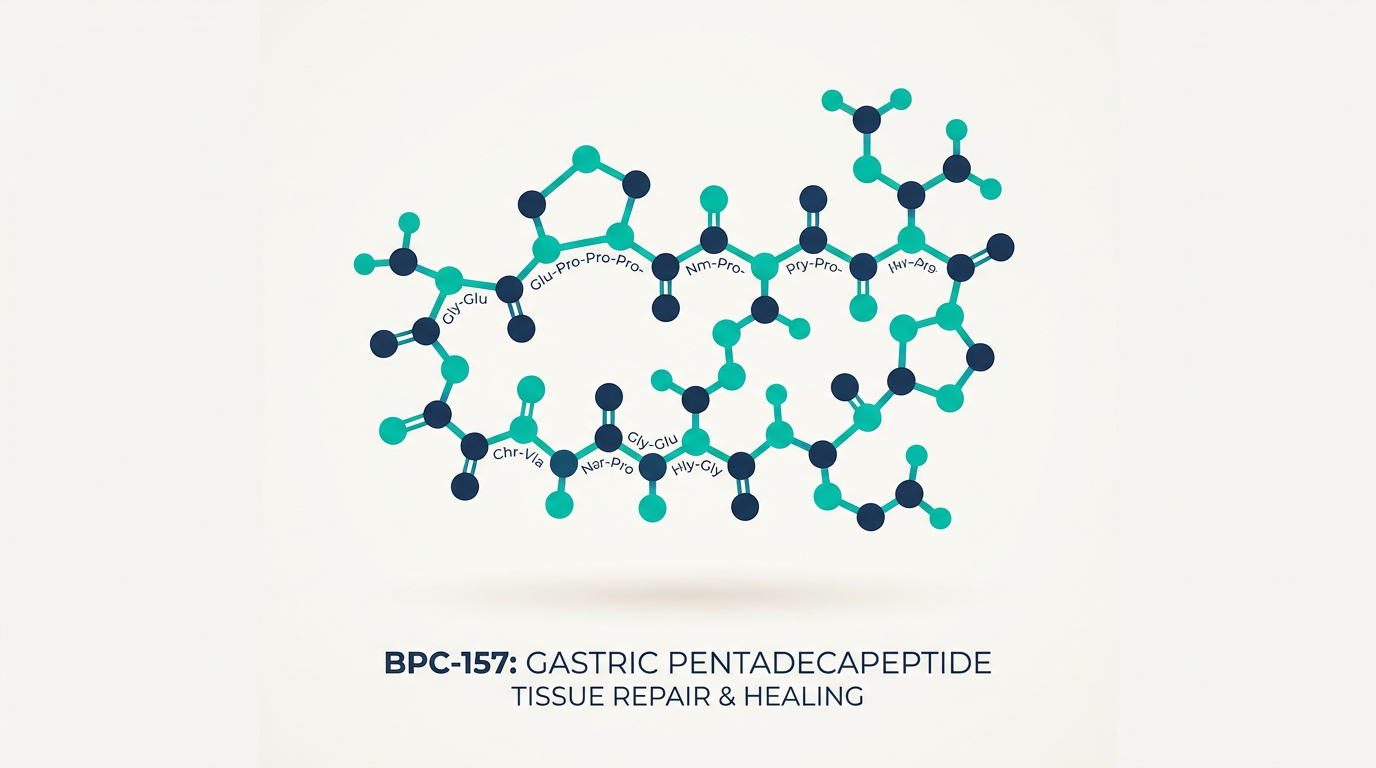
BPC-157, or Body Protection Compound 157, is a synthetic peptide that has garnered significant attention within the research community for its potential regenerative capabilities. Comprising a sequence of 15 amino acids, it is a partial fragment of a protective protein naturally found in human gastric juice.
Researchers are primarily interested in BPC-157 for its observed cytoprotective and tissue-healing properties demonstrated across a wide array of preclinical studies. Its stability and resistance to degradation in the gastrointestinal tract make it a unique subject for both systemic and oral administration models.
Studies, predominantly in animal models, have explored its effects on wound healing, tendon and ligament repair, gut health, and neuroprotection. Despite a large volume of preclinical data suggesting a favourable safety profile and therapeutic potential, BPC-157 remains an investigational compound, not approved for human use by any global drug regulatory agency, and its use is prohibited in competitive sports.
What is BPC-157?
BPC-157, also known by the names bepecin, PL 14736, PL-10, and PLD-116, is a synthetic peptide chain classified as a pentadecapeptide due to its structure of 15 amino acids. Its specific amino acid sequence is Gly-Glu-Pro-Pro-Pro-Gly-Lys-Pro-Ala-Asp-Asp-Ala-Gly-Leu-Val. This sequence is derived from a larger, naturally occurring protein identified in human gastric fluid, first isolated and characterized in the early 1990s by a research team at the University of Zagreb in Croatia, led by Professor Predrag Sikiric.
From a molecular standpoint, BPC-157 is notable for its exceptional stability. Unlike many other peptides that are quickly broken down by enzymes or acidic environments, BPC-157 shows remarkable resistance to hydrolysis, enzyme digestion, and the harsh conditions of gastric juice. This inherent stability allows it to remain biologically active for extended periods, a characteristic that makes it suitable for oral administration in research settings, particularly for studies focused on gastrointestinal health.
Pharmacokinetic studies in animal models have further elucidated its properties. Following administration, BPC-157 is rapidly metabolized into smaller peptide fragments and eventually into single amino acids, which then enter the body's normal amino acid metabolic and excretion pathways. Studies in rats and beagle dogs have shown a rapid elimination half-life of less than 30 minutes after intravenous administration. The absolute bioavailability following intramuscular injection was found to be approximately 14–19% in rats and 45–51% in beagle dogs, indicating variable absorption depending on the species and administration route.
Mechanism of Action
The therapeutic potential observed for BPC-157 in preclinical models is believed to stem from its influence over multiple interconnected biological pathways. Its mechanism of action is pleiotropic, meaning it produces its effects through a variety of different, but related, cellular and molecular processes rather than a single target receptor.
Growth Factor Modulation and Angiogenesis: A primary mechanism attributed to BPC-157 is its ability to promote angiogenesis, the formation of new blood vessels from pre-existing ones. This is crucial for healing, as new vessels supply oxygen, nutrients, and reparative cells to damaged tissue. BPC-157 has been shown to upregulate the expression of Vascular Endothelial Growth Factor (VEGF). Research indicates it specifically activates the VEGFR2/Akt-eNOS signaling pathway, which is a central cascade for its angiogenic and tissue-protective effects.
Nitric Oxide (NO) System Modulation: BPC-157 interacts with the nitric oxide (NO) system, a critical regulator of vascular tone and blood flow. It appears to normalize NO levels, which can be dysregulated during injury or inflammation. By modulating the NO pathway, it can enhance vasodilation, thereby improving blood flow to injured tissues.
Activation of the FAK-Paxillin Pathway: For musculoskeletal applications, BPC-157's effect on the focal adhesion kinase (FAK) signaling cascade is of particular interest. The FAK-paxillin pathway is central to cell adhesion, migration, and proliferation. By activating this pathway, BPC-157 is thought to promote the migration and spreading of fibroblasts and other reparative cells.
Anti-Inflammatory Effects: BPC-157 exhibits potent anti-inflammatory properties. Studies have shown that it can reduce the expression of pro-inflammatory cytokines such as Tumour Necrosis Factor-alpha (TNF-α) and Interleukin-6 (IL-6). Concurrently, it reduces markers of oxidative stress and promotes the activity of anti-inflammatory mediators.
Research Applications
The vast majority of research on BPC-157 has been conducted in preclinical settings using laboratory animals. These studies have explored a wide range of potential applications, demonstrating consistent and rapid healing effects across various tissue types.
- Tendon and Ligament Healing: Animal models involving transected Achilles tendons or damaged medial collateral ligaments have shown that BPC-157 can significantly accelerate the healing process. Researchers observed improved collagen organization, increased fibroblast migration, and enhanced biomechanical properties of the healed tendons.
- Gut Health and Gastroprotection: Given its origin from gastric juice, BPC-157 has been heavily investigated for its protective effects on the gastrointestinal tract. Animal studies have shown that it can protect the gastric mucosa from damage induced by NSAIDs, alcohol, and stress.
- Muscle Healing: In animal models of skeletal muscle injury, including crush injuries and surgical transection, BPC-157 has been shown to accelerate the healing and functional recovery of the muscle tissue.
- Neuroprotection: Research suggests BPC-157 may support nervous system repair. Studies have explored its potential to promote peripheral nerve regeneration after injury and to offer protection against the effects of various neurotoxins.
- Bone Healing: Preliminary data from animal models indicates that BPC-157 may accelerate the healing process of bone fractures.
- Cardiovascular and Organ Protection: BPC-157 has demonstrated cardioprotective effects in animal models, including the ability to restore sinus rhythm in arrhythmia models and protect against damage from ischemia-reperfusion injury.
Dosage Protocols in Studies
As BPC-157 is not an approved drug, there are no official dosage guidelines. The protocols described in research literature vary based on the administration route and the condition being studied. All dosage information is for research reference only.
- Subcutaneous Injection: This is a common method for systemic delivery. Doses in research commonly range from 250 to 500 micrograms (mcg) administered once or twice daily. For localized injuries, injections are often administered near the site of injury.
- Oral (Capsule): For gastrointestinal studies, oral administration is preferred. Research protocols often use doses ranging from 500 to 1000 mcg, taken once or twice daily.
- Topical Application: For skin injuries, topical preparations have been used in research, typically applied 2 to 3 times per day directly to the affected area.
- Dosage by Body Weight: In preclinical animal studies, effective doses have ranged from 6 to 50 mcg per kilogram of body weight.
Research cycles typically run for 4 to 8 weeks, often followed by a break of 2 to 4 weeks before potentially resuming. BPC-157 is supplied as a lyophilized (freeze-dried) powder that must be reconstituted with bacteriostatic water.
Safety Profile & Considerations
In preclinical research, BPC-157 has demonstrated a remarkably high safety threshold. No lethal dose has been established in animal studies, even at dosages many orders of magnitude higher than those used in therapeutic research. It does not appear to interact with major hormonal systems or cause immunosuppression.
Reported side effects in human anecdotal use are generally mild and may include: • Mild nausea, particularly with oral administration • Redness, itching, or irritation at the injection site • Temporary dizziness or mild headache • Changes in appetite or weight
A significant theoretical concern revolves around its pro-angiogenic properties. Because cancer growth is dependent on angiogenesis, any compound that promotes this process could theoretically accelerate tumour growth. However, a 2025 safety review argued that BPC-157 appears to regulate angiogenesis in a context-dependent manner. To date, no study has observed an increased risk of tumour development with BPC-157 administration in animals. Nevertheless, as a precaution, its use is generally contraindicated in individuals with active cancers.
It is critical to reiterate that long-term human safety data is non-existent. A systematic review found no clinical safety data beyond a very small case series, emphasizing that the safety profile for chronic use in humans remains uncharacterized.
Canadian Regulatory Context
BPC-157 has not been approved for human medical use by Health Canada or any other major regulatory body, including the U.S. FDA or the European Medicines Agency. Its global status is that of an investigational, research-only chemical.
Health authorities in several countries, such as Australia and New Zealand, have taken steps to restrict its availability, classifying it as a prescription-only medicine despite it not being a legitimately prescribed product.
In the athletic world, the World Anti-Doping Agency (WADA) added BPC-157 to its Prohibited List in 2022 under the S0 category of “Non-Approved Substances.” This means its use is banned at all times for athletes competing under WADA-affiliated organizations.
In Canada, BPC-157 can be acquired through companies that supply chemicals for research purposes, but it cannot be legally marketed or sold as a dietary supplement or therapeutic drug. It is important to understand that products purchased from research chemical suppliers have no regulatory guarantees regarding purity, potency, or sterility.
Frequently Asked Questions
What is the primary focus of BPC-157 research?
Research on BPC-157 is primarily focused on its tissue-healing and regenerative properties. The most extensively studied areas include the accelerated healing of musculoskeletal tissues like tendons, ligaments, and muscles, as well as its protective and reparative effects on the gastrointestinal tract.
Is BPC-157 a steroid or a hormone?
No, BPC-157 is neither a steroid nor a hormone. It is a peptide, which is a short chain of amino acids. It does not interact with the body’s hormonal systems in the way that anabolic steroids or hormone therapies do.
What is the difference between oral and injectable BPC-157 in research?
Injectable BPC-157 (usually subcutaneous) is used for systemic effects or to target a specific localized injury (e.g., a damaged tendon). Oral BPC-157 is often used in studies focusing on gastrointestinal issues, like healing stomach ulcers or reducing inflammation in the gut, due to its high stability in gastric acid.
Why is BPC-157 banned by WADA?
WADA has banned BPC-157 because it falls into the category of a “Non-Approved Substance” with the potential to enhance performance through its regenerative capabilities. The ability to accelerate healing from injury could provide an unfair advantage.
Are there any established long-term risks associated with BPC-157?
No, there are no established long-term risks in humans because sufficient long-term human studies have not been conducted. While animal studies show a good safety profile, a theoretical risk involving its pro-angiogenic effects and potential cancer promotion is a point of consideration, though no evidence has supported this risk in practice.
Research Disclaimer
The information presented on this page is for educational and research purposes only. This content does not constitute medical advice, diagnosis, or treatment recommendations. The compounds discussed are investigational and, unless otherwise noted, have not been approved for human therapeutic use by Health Canada or any other regulatory body. Always consult a qualified healthcare professional before considering any new treatment or substance.
Looking for Research-Grade Peptides?
HCR Health provides high-purity, third-party tested research peptides for the Canadian market.
Browse Products at HCR Health