Canadian Winter Peptide Shipping: Protecting Your Research Materials
Temperatures can plunge below -30°C during Canadian winters. Here's how to ensure your peptides survive the journey from warehouse to laboratory.
Winter Is Coming for Your Peptides
Canadian winters present a unique logistics challenge for peptide researchers. While extreme cold is generally less damaging to lyophilised peptides than extreme heat, the rapid temperature transitions and prolonged exposure to sub-zero conditions during shipping can still compromise your materials.
As temperatures begin to drop, here's what you need to plan for.
The Real Risk: Thermal Shock, Not Cold
A common misconception is that cold itself damages lyophilised peptides. In reality, lyophilised (freeze-dried) powder is essentially already frozen material with the water removed. A sealed vial of lyophilised BPC-157 sitting at -30°C in a Canada Post truck is, chemically speaking, not much different from the same vial sitting in your -20°C freezer.
The real danger is thermal shock — the rapid temperature change that occurs when a package goes from -30°C outside to +22°C inside your heated home. This rapid transition causes:
- Condensation: Moisture forms on cold surfaces, including inside the vial if the seal isn't perfect. This moisture contacts the lyophilised cake and begins dissolution and degradation.
- Pressure differentials: Rapid warming can create slight pressure changes that affect seal integrity on vials.
- For reconstituted peptides: Freeze-thaw damage is severe. Ice crystals physically shear peptide molecules (cryoconcentration damage).
Practical Winter Shipping Strategy
Ordering Tips
- Order early in the week — Monday or Tuesday shipments are less likely to sit in a warehouse or truck over a weekend in freezing conditions
- Choose expedited shipping — reduce the total time your package is exposed to extreme temperatures
- Use a tracked service — know when your package arrives so it doesn't sit in a community mailbox overnight
- Consider a pickup location — postal outlets and Flex Delivery addresses are climate-controlled
When the Package Arrives
- Do not open immediately. Bring the sealed package indoors and let it sit at room temperature for 30-60 minutes. This allows gradual temperature equilibration and prevents condensation inside the vials.
- Check temperature indicators if included. Many quality suppliers include temperature monitor strips.
- Inspect vial seals for any signs of compromise.
- Move to proper storage (-20°C freezer for lyophilised, 2-8°C fridge for reconstituted) after equilibration.
Regional Considerations Across Canada
Not all Canadian winters are equal:
- Prairies (AB, SK, MB): The most extreme cold. Temperatures regularly reach -30°C to -40°C. Packages can freeze solid during overnight transit. Always use expedited shipping and consider insulated packaging requests.
- Central Canada (ON, QC): Moderate to severe cold. Major urban centres (Toronto, Montreal) have delivery infrastructure that limits extreme exposure, but rural routes are higher risk.
- Maritimes (NB, NS, PE, NL): Cold with high humidity. The moisture component adds freeze-thaw risk even at moderately cold temperatures.
- West Coast (BC - Lower Mainland): Mild winters. Standard shipping is generally adequate, though mountain passes during transit can introduce cold exposure.
- Northern Territories (YT, NT, NU): Extreme cold with limited shipping infrastructure. Air freight is often the only option, which actually helps by reducing transit time.
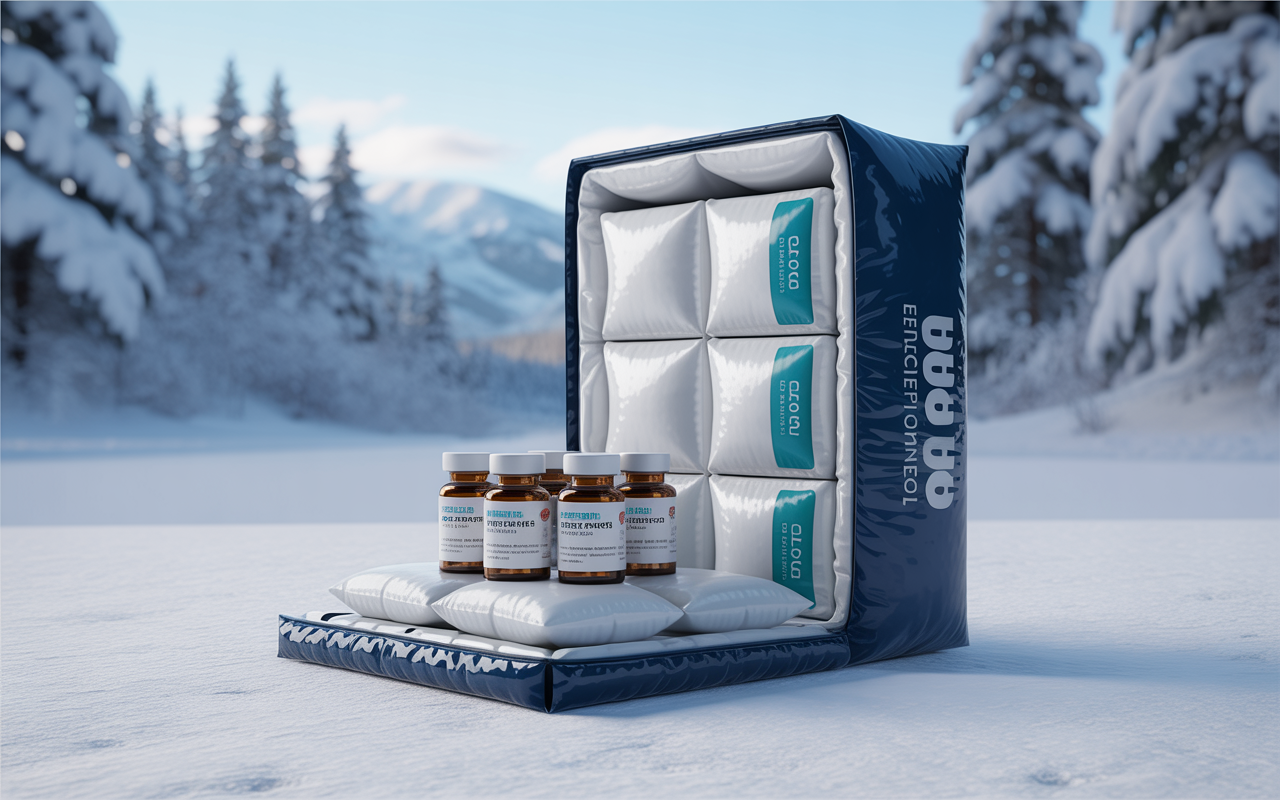
Requesting Cold-Chain Packaging
Reputable suppliers offer cold-chain shipping options. Ask about:
- Insulated boxes with reflective lining (protects against both heat and cold)
- Phase-change materials — gel packs designed to maintain a specific temperature range rather than just "cold"
- Thermal blankets for the inner packaging
- Data loggers that record the temperature history of the shipment
Some suppliers charge extra for winter packaging. This is generally a worthwhile investment, particularly for expensive peptides or large orders.
Never Ship Reconstituted Peptides in Winter
If you need to transport reconstituted peptides during winter, never use standard mail. The freeze-thaw cycle will almost certainly damage the product. Options include:
- Validated cold-chain couriers that maintain 2-8°C throughout transit
- Personal transport in an insulated container with phase-change packs
- Reconstitute at the destination from lyophilised stock (the best option)
Long-Term Winter Storage Considerations
Winter also affects home storage conditions:
- Forced air heating reduces indoor humidity, which is actually beneficial for lyophilised peptide storage (lower ambient moisture)
- Temperature fluctuations from heating cycles can affect poorly sealed vials. Dedicated storage in a consistent location away from heat vents is ideal
- Power outages during ice storms can affect freezer and refrigerator temperatures. A min/max thermometer will tell you if your storage was compromised
For the complete year-round storage guide, see our storage and handling guide.
Research Disclaimer
The information presented on this page is for educational and research purposes only. This content does not constitute medical advice, diagnosis, or treatment recommendations. The compounds discussed are investigational and, unless otherwise noted, have not been approved for human therapeutic use by Health Canada or any other regulatory body. Always consult a qualified healthcare professional before considering any new treatment or substance.
Looking for Research-Grade Peptides?
HCR Health provides high-purity, third-party tested research peptides for the Canadian market.
Browse Products at HCR Health