Peptide Degradation Pathways: What Every Researcher Should Monitor
Degraded peptides don't just lose potency — they introduce variables that can invalidate your research. Here's what to watch for.
Why Degradation Is a Research Variable, Not Just a Quality Issue
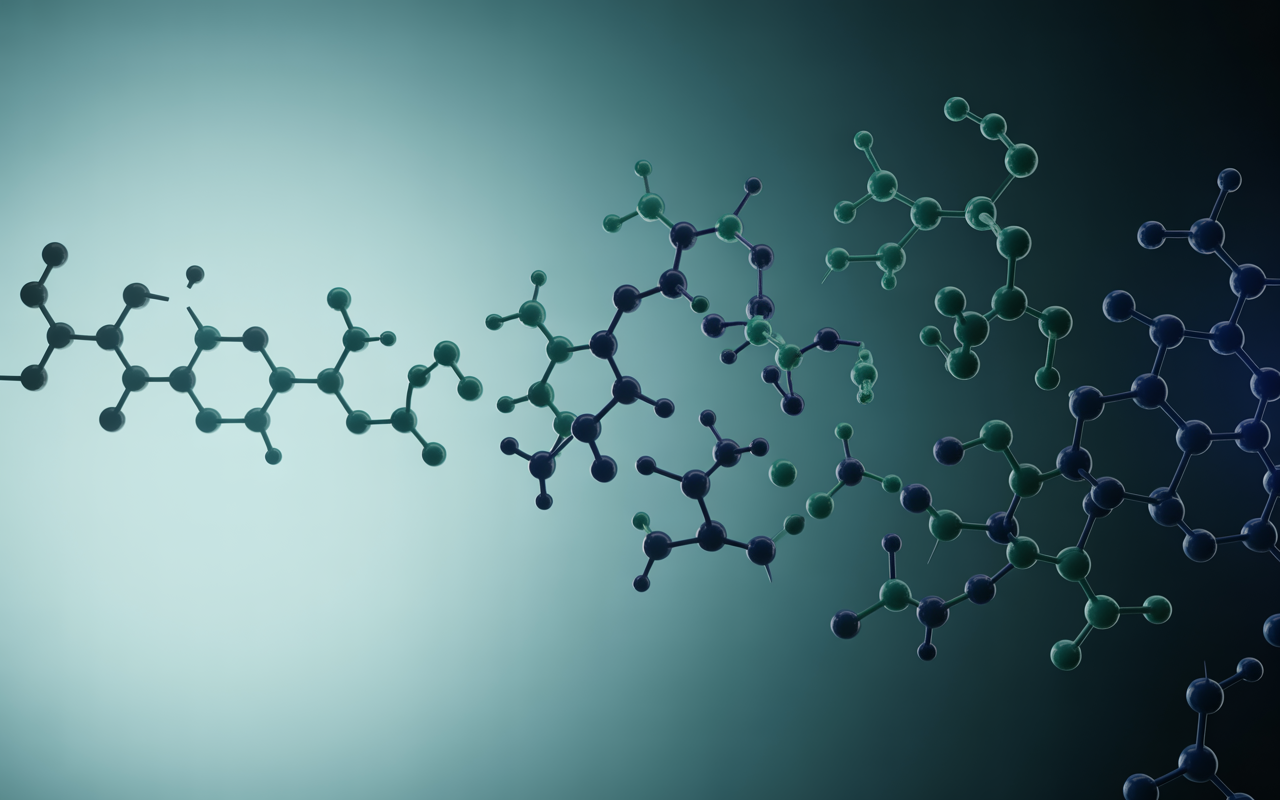
Most researchers think about peptide degradation as a storage problem — keep it cold, use it fresh, and you're fine. But degradation is also an experimental variable that can introduce systematic bias into your results if you're not monitoring for it.
A partially degraded peptide doesn't simply become "weaker." It becomes a mixture of the parent compound plus degradation products, each potentially with its own biological activity. If you're not accounting for this, you're introducing an uncontrolled variable into every experiment.
Oxidation: The Silent Research Confounder
Oxidation is the most common and most insidious degradation pathway because it can begin immediately upon reconstitution and progress invisibly.
What happens: Methionine residues oxidise to methionine sulfoxide. Tryptophan residues can form kynurenine or hydroxytryptophan. Cysteine residues form disulphide bonds or sulphonic acid.
Why it matters for research: Oxidised peptides often retain partial biological activity — but altered activity. For example, methionine-oxidised growth hormone retains binding affinity for its receptor but shows reduced signal transduction. If your peptide is 20% oxidised, you're effectively working with a mixture of two compounds with different dose-response curves.
How to monitor: Compare HPLC retention times of freshly reconstituted versus aged samples. Oxidised species typically elute earlier (more hydrophilic). Mass spectrometry can confirm oxidation by showing a mass increase of +16 Da per oxidised methionine.
Prevention: Minimise oxygen exposure (small vials, minimal headspace), protect from light, use antioxidant-compatible buffers when appropriate, and reconstitute fresh for each experiment.
Hydrolysis: The Clock Starts at Reconstitution
Peptide bond hydrolysis is driven by water and accelerated by temperature. It's inevitable in reconstituted peptides — the question is how fast it progresses.
What happens: Peptide bonds cleave, producing truncated fragments. Asp-Pro bonds are notoriously labile. Aspartate residues can also undergo aspartimide formation and isomerisation.
Why it matters for research: Fragmented peptides may be completely inactive, or they may interact with receptors or assay systems in unpredictable ways. In cell-based assays, fragments can compete with intact peptide for receptor binding, complicating dose-response interpretation.
How to monitor: HPLC analysis showing new peaks appearing over time. Mass spectrometry of aged samples revealing lower molecular weight species.
Prevention: Refrigerate immediately after reconstitution. Use within the recommended timeframe. Lyophilised peptides are resistant to hydrolysis due to low water content.
Aggregation: When Peptides Clump
Aggregation is particularly problematic because aggregated peptide can go undetected until it significantly affects results.
What happens: Peptide molecules associate through hydrophobic interactions, hydrogen bonding, or disulphide bridges. Early aggregates (dimers, trimers) are soluble and invisible. Later-stage aggregation produces visible particles or turbidity.
Why it matters for research: Aggregated peptides are typically biologically inactive but consume your apparent dose. If 30% of your peptide is aggregated, your effective concentration is 30% lower than calculated. This creates apparent dose-response shifts that could be misinterpreted as biological variability.
How to monitor: Visual inspection (cloudiness, particles) catches late-stage aggregation. Dynamic light scattering (DLS) can detect early soluble aggregates. Size-exclusion chromatography separates monomeric from aggregated species.
Prevention: Avoid high concentrations. Don't freeze reconstituted peptides. Minimise agitation (no shaking). Avoid repeated temperature cycling.
Deamidation: The Subtle Charge Change
What happens: Asparagine residues lose their amide group, converting to aspartate. This changes the residue's charge from neutral to negative, which can alter protein folding and receptor interactions.
Why it matters for research: Deamidation is often the most functionally significant modification because the charge change can dramatically affect binding affinity. A deamidated peptide might bind its receptor with 50% reduced affinity — not enough to eliminate activity, but enough to shift dose-response curves.
How to monitor: Deamidation adds +1 Da to molecular mass (detectable by MS). It also changes HPLC elution profile slightly, producing a shoulder or new peak adjacent to the main peak.
Prevention: Store at low pH (if compatible with the peptide). Keep temperature low. Deamidation accelerates above pH 6.
Building Degradation Monitoring Into Your Workflow
For rigorous research, consider:
- Baseline HPLC of freshly reconstituted peptide
- Periodic HPLC checks if running experiments over days or weeks
- Mass spectrometry confirmation at the start of each new batch
- Visual inspection before every use
- Temperature logging of storage equipment
- Consistent reconstitution dates relative to experiment timing
These steps add modest effort but dramatically improve confidence in your data. When a reviewer asks whether your peptide was intact during the experiment, you'll have the data to answer.
For practical storage protocols to minimise degradation, see our storage and handling guide.
Research Disclaimer
The information presented on this page is for educational and research purposes only. This content does not constitute medical advice, diagnosis, or treatment recommendations. The compounds discussed are investigational and, unless otherwise noted, have not been approved for human therapeutic use by Health Canada or any other regulatory body. Always consult a qualified healthcare professional before considering any new treatment or substance.
Looking for Research-Grade Peptides?
HCR Health provides high-purity, third-party tested research peptides for the Canadian market.
Browse Products at HCR Health