Subcutaneous vs Intramuscular: Choosing the Right Injection Route
The choice between subcutaneous and intramuscular injection affects absorption, onset, and research outcomes. Here's what the evidence says.
Why Injection Route Matters
For injectable peptides, the route of administration isn't just a matter of convenience — it fundamentally affects how the peptide is absorbed, how quickly it reaches target tissues, and how long it remains active in the body. The two most common routes for research peptides are subcutaneous (SC) and intramuscular (IM) injection. Understanding the differences helps researchers design more consistent and reproducible protocols.
Subcutaneous Injection: The Default for Most Peptides
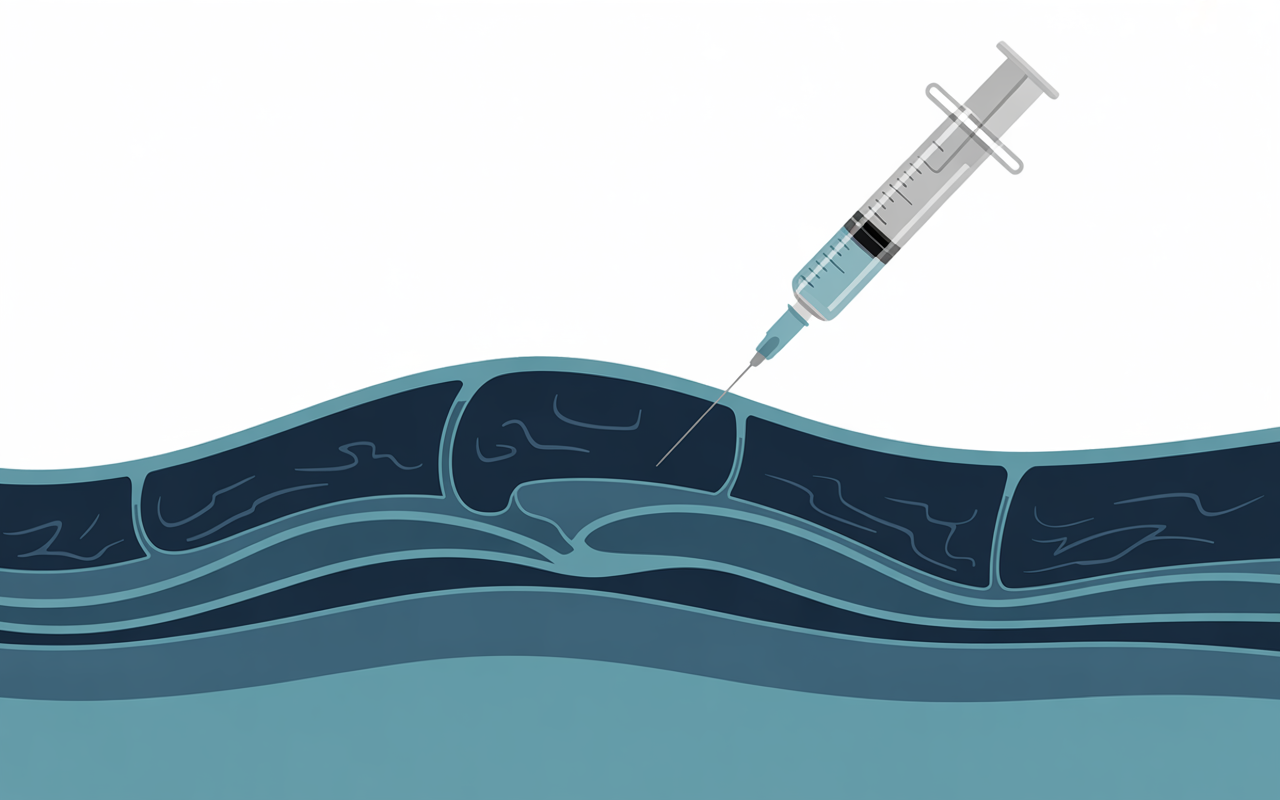
Subcutaneous injection delivers the peptide into the fat layer between the skin and muscle. This is the most commonly recommended route for the majority of research peptides, and for good reason.
Advantages: - **Slower, more sustained absorption** — the limited blood supply in subcutaneous fat creates a depot effect, releasing the peptide gradually - **Easier to administer** — shorter needle (29-31 gauge, 6-8mm), less depth precision required - **Less painful** — subcutaneous tissue has fewer sensory nerve endings than muscle - **Lower injection site reaction risk** — generally better tolerated with repeated dosing - **Self-administration friendly** — abdominal and thigh sites are easily accessible
Pharmacokinetics: Subcutaneous injection typically produces a gradual absorption curve with lower peak concentration (Cmax) but longer duration compared to IM. For peptides where sustained release is desirable — like growth hormone-releasing peptides or long-acting analogues — this profile is advantageous.
Best for: - [BPC-157](/peptides/bpc-157) (localised or systemic) - GHRPs (Ipamorelin, Hexarelin) - GHRHs (CJC-1295, Sermorelin) - Semaglutide (pharmaceutical formulations are designed for SC) - Melanotan II - PT-141 - Most research peptide protocols
Intramuscular Injection: When Speed or Localisation Matters
Intramuscular injection delivers the peptide directly into muscle tissue, which has significantly greater blood supply than subcutaneous fat.
Advantages: - **Faster absorption** — higher vascularity means the peptide reaches systemic circulation more quickly - **Higher peak concentration** — produces a sharper Cmax, which may be beneficial for peptides requiring a bolus effect - **Larger volume capacity** — muscle tissue can accommodate larger injection volumes (up to 3-5 mL depending on site) compared to SC (typically 1-2 mL) - **Localised delivery** — for muscle-targeting peptides, IM provides direct tissue exposure
Pharmacokinetics: IM injection produces a faster onset and higher peak plasma concentration but shorter duration compared to SC. The absorption rate depends on the specific muscle group — deltoid and vastus lateralis have higher blood flow than gluteal muscle.
Best for: - TB-500 (systemic tissue repair — either route works, but some protocols specify IM) - When faster onset is desired - Larger volume injections - Direct muscle tissue research
Key Differences: Head-to-Head
- Absorption speed: IM is faster. SC provides more gradual, sustained release.
- Peak concentration: IM produces higher Cmax. SC produces lower but more sustained levels.
- Duration: SC generally provides longer-lasting plasma levels.
- Pain and comfort: SC is generally less painful and better tolerated.
- Precision required: IM requires correct depth and angle to ensure the needle reaches muscle. SC is more forgiving.
- Injection site reactions: Both can cause localised reactions, but SC reactions are typically milder.
Practical Considerations for Canadian Researchers
Needle Selection: - **SC:** 29-31 gauge, 6-8mm (insulin syringes work perfectly) - **IM:** 23-25 gauge, 25-38mm (longer needle to reach muscle depth)
Injection Sites: - **SC:** Abdominal fat (most common), thigh, upper arm - **IM:** Deltoid, vastus lateralis (outer thigh), ventrogluteal (hip)
Volume Limits: - **SC:** 0.5-2 mL per site (smaller volumes are more comfortable) - **IM:** 1-5 mL depending on muscle group
Temperature: Regardless of route, allow refrigerated peptide solutions to reach room temperature before injection. Cold injections are more painful and may affect absorption rates.
When the Route Is Specified in Literature
Always follow the administration route specified in published research protocols when replicating studies. Changing the injection route changes the pharmacokinetic profile, which can invalidate comparisons with published data.
If no specific route is indicated, subcutaneous is generally the safest default for most research peptide protocols. It provides consistent absorption, is easier to standardise across subjects, and has a well-established safety profile.
The Oral Alternative
It's worth noting that some peptides can bypass injection entirely. BPC-157 is uniquely stable in gastric acid and can be administered orally — particularly relevant for gastrointestinal research. Most other peptides are degraded by digestive enzymes and stomach acid, making oral administration impractical without specialised formulation.
For more on how peptides interact with the body at the cellular level, see our guide on how peptides work.
Research Disclaimer
The information presented on this page is for educational and research purposes only. This content does not constitute medical advice, diagnosis, or treatment recommendations. The compounds discussed are investigational and, unless otherwise noted, have not been approved for human therapeutic use by Health Canada or any other regulatory body. Always consult a qualified healthcare professional before considering any new treatment or substance.
Looking for Research-Grade Peptides?
HCR Health provides high-purity, third-party tested research peptides for the Canadian market.
Browse Products at HCR Health