Semaglutide: Complete Research Guide
A GLP-1 receptor agonist approved by Health Canada for type 2 diabetes and chronic weight management. One of the few peptides with full regulatory approval and extensive clinical data.
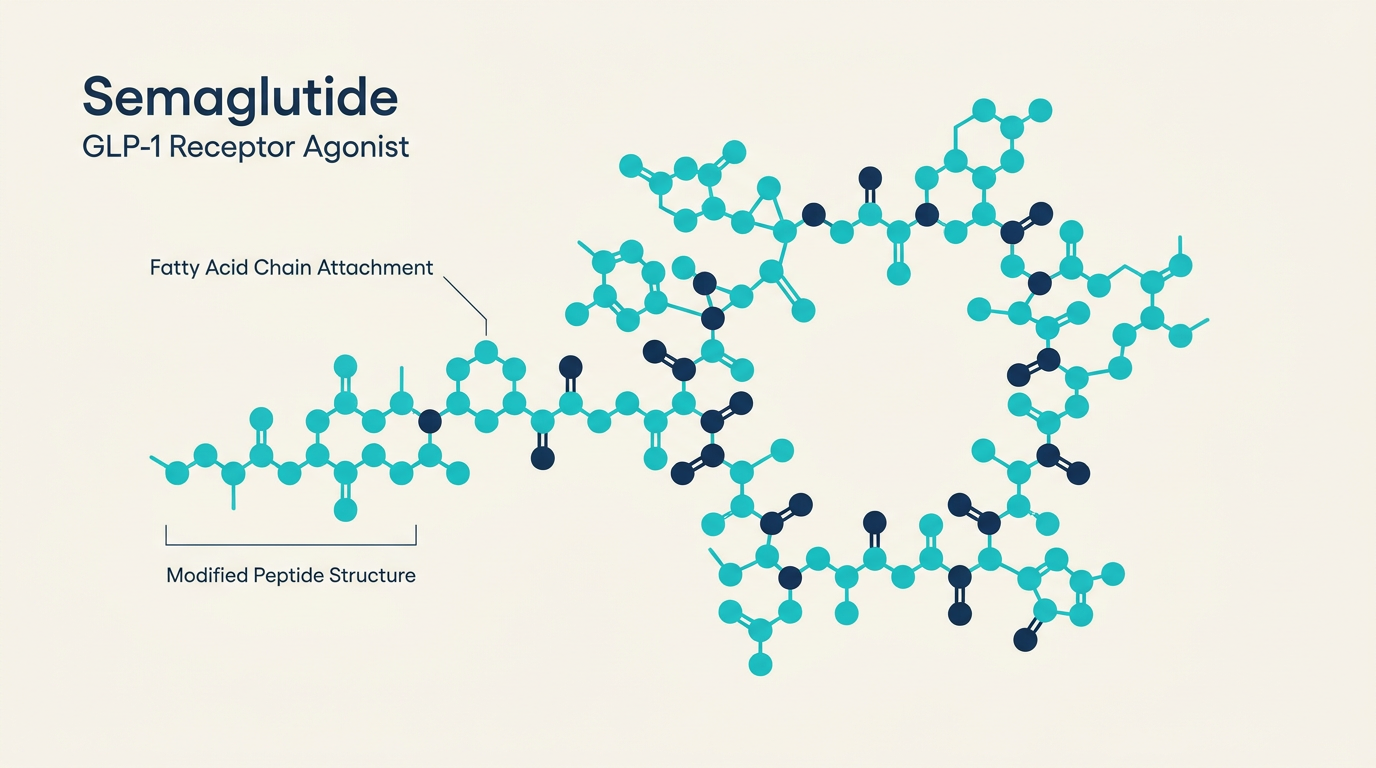
Semaglutide is a therapeutic peptide that functions as a glucagon-like peptide-1 (GLP-1) receptor agonist. It is a well-established and medically approved pharmaceutical drug used primarily for the management of type 2 diabetes mellitus and for chronic weight management in individuals with obesity or who are overweight with comorbidities.
Structurally, it is an analogue of the human GLP-1 hormone, modified for a significantly extended duration of action, allowing for once-weekly administration. Its mechanism of action involves mimicking the body’s natural incretin hormones to improve glycemic control and reduce appetite.
Unlike the other peptides covered on this site, Semaglutide has undergone extensive clinical trials and is approved for medical use by major regulatory bodies worldwide, including Health Canada. It is available under the brand names Ozempic®, Wegovy®, and Rybelsus®.
What is Semaglutide?
Semaglutide is a synthetic peptide analogue of human GLP-1, sharing 94% structural similarity with the naturally occurring hormone. GLP-1 is an incretin hormone produced by L-cells in the small intestine in response to food intake. It plays a crucial role in glucose homeostasis and appetite regulation.
Natural GLP-1 has a very short half-life of only 1-2 minutes because it is rapidly degraded by the enzyme dipeptidyl peptidase-4 (DPP-4). To overcome this, Semaglutide was engineered with two key structural modifications:
- Amino Acid Substitution: The alanine at position 8 is replaced with α-aminoisobutyric acid, making the peptide resistant to DPP-4 degradation.
- Fatty Acid Acylation: A C18 fatty diacid chain is attached to the lysine residue at position 26, allowing the molecule to bind strongly to albumin. This creates a circulating depot, protecting the peptide from renal clearance.
These modifications result in a dramatically prolonged elimination half-life of approximately one week (about 165 hours), making Semaglutide suitable for once-weekly subcutaneous injection. It is available as Ozempic® (injectable for diabetes), Wegovy® (injectable for weight management), and Rybelsus® (oral for diabetes).
Mechanism of Action
Semaglutide works by selectively binding to and activating the GLP-1 receptor, which is found in the pancreas, brain, stomach, heart, and blood vessels.
In the Pancreas (Glucose-Dependent Effects): • Stimulates beta cells to release insulin only when blood glucose is elevated, reducing hypoglycemia risk • Suppresses glucagon secretion from alpha cells in a glucose-dependent manner
In the Stomach: • Delays gastric emptying, leading to more gradual nutrient absorption and prevention of post-meal blood sugar spikes. This also contributes to the feeling of fullness.
In the Brain (Central Nervous System): • Crosses the blood-brain barrier and acts on GLP-1 receptors in the hypothalamus, increasing feelings of satiety, reducing hunger and food cravings, and decreasing overall energy intake. This is the primary driver of Semaglutide’s significant weight loss effects.
Together, these mechanisms lead to improved glycemic control, reduced body weight, and have also been shown to confer cardiovascular benefits.
Research Applications
As an approved medication, Semaglutide’s primary applications are supported by extensive clinical trial data from the SUSTAIN and STEP trial programs.
- Type 2 Diabetes Mellitus: Semaglutide (as Ozempic® and Rybelsus®) is approved to improve glycemic control. It is highly effective at lowering blood glucose and HbA1c.
- Chronic Weight Management: Semaglutide (as Wegovy®) is approved for weight management in adults with obesity (BMI ≥30) or who are overweight (BMI ≥27) with comorbidities. It is also approved for adolescents aged 12 and older with obesity. Clinical trials have shown average weight loss of 15% or more of initial body weight.
- Cardiovascular Risk Reduction: Ozempic® is also approved to reduce the risk of major adverse cardiovascular events (heart attack, stroke, cardiovascular death) in adults with T2DM and established cardiovascular disease.
- Ongoing Research: Studies continue to explore benefits for fatty liver disease (MASH), kidney disease progression in diabetics, and potential roles in managing PCOS and addiction.
Dosage Protocols in Studies
Dosage protocols for Semaglutide are well-defined and approved by regulatory bodies. They involve a dose-escalation schedule to improve tolerability.
Ozempic® (Subcutaneous for T2DM): • Starting: 0.25 mg once weekly for 4 weeks • Titration: Increase to 0.5 mg, then 1.0 mg, then up to 2.0 mg once weekly (at least 4 weeks at each level)
Wegovy® (Subcutaneous for Weight Management): • Starting: 0.25 mg once weekly for 4 weeks • Titration: 0.5 mg → 1.0 mg → 1.7 mg → 2.4 mg once weekly (each increase after 4 weeks)
Rybelsus® (Oral for T2DM): • Taken daily on an empty stomach with no more than 4 oz of water. Wait 30 minutes before eating. • Starting: 3 mg daily for 30 days • Titration: 7 mg daily, then up to 14 mg daily
Safety Profile & Considerations
Semaglutide is associated with a well-characterized range of side effects, primarily gastrointestinal.
Common Side Effects: • Nausea, vomiting, diarrhea, constipation • Abdominal pain • Loss of appetite
These are most common during dose escalation and tend to diminish over time.
Serious but Less Common Risks: • Pancreatitis (inflammation of the pancreas) • Gallbladder problems including gallstones • Acute kidney injury, particularly with severe dehydration from vomiting/diarrhea • Worsening of diabetic retinopathy complications • Hypoglycemia risk increases when combined with sulfonylureas or insulin
Thyroid C-Cell Tumours: In rodent studies, Semaglutide caused a dose-dependent increase in thyroid C-cell tumours. It is unknown if this risk applies to humans. As a precaution, Semaglutide has a boxed warning and is contraindicated in patients with a personal or family history of medullary thyroid carcinoma (MTC) or Multiple Endocrine Neoplasia syndrome type 2 (MEN 2).
Semaglutide is contraindicated during pregnancy.
Canadian Regulatory Context
Semaglutide is an approved prescription medication in Canada. Health Canada has authorized:
- Ozempic® (subcutaneous injection): For the treatment of type 2 diabetes and to reduce the risk of cardiovascular events
- Rybelsus® (oral tablets): For the treatment of type 2 diabetes
- Wegovy® (subcutaneous injection): For chronic weight management
As a prescription drug, Semaglutide can only be obtained with a prescription from a licensed healthcare provider and dispensed by a pharmacy. Its use is medically supervised, and it is not available over-the-counter or as a research chemical. The cost may be covered by provincial or private drug benefit plans, depending on the indication and specific plan criteria.
This is a key distinction from other peptides on this site: Semaglutide is a fully approved, prescription pharmaceutical product with extensive clinical data supporting its safety and efficacy when used under medical supervision.
Frequently Asked Questions
Is Semaglutide a type of insulin?
No, Semaglutide is not insulin. It is a GLP-1 receptor agonist that stimulates the body to release its own insulin in a glucose-dependent manner. It also suppresses glucagon and reduces appetite, effects that insulin does not provide.
Why does Semaglutide cause weight loss?
The primary mechanism for weight loss is its effect on the brain. By activating GLP-1 receptors in the hypothalamus, it increases feelings of fullness and reduces hunger and cravings. This leads to a spontaneous reduction in calorie intake. The slowing of gastric emptying also contributes.
What is the difference between Ozempic® and Wegovy®?
Both are injectable Semaglutide but are approved for different indications. Ozempic® is primarily for type 2 diabetes (max
0 mg/week). Wegovy® is specifically for chronic weight management (maintenance dose
4 mg/week).
Are the gastrointestinal side effects permanent?
For most people, common GI side effects like nausea and diarrhea are most pronounced when starting or increasing the dose. They typically lessen over several weeks as the body adapts. The slow dose-escalation schedule helps mitigate these effects.
Can Semaglutide be used for weight loss without diabetes?
Yes. Wegovy® is specifically approved by Health Canada for chronic weight management in individuals who meet BMI criteria, regardless of diabetes status. It requires a prescription and medical supervision.
What happens when someone stops taking Semaglutide?
Semaglutide’s effects are not permanent. When discontinued, appetite returns to pre-treatment levels and most individuals regain a significant portion of lost weight. Its benefits for blood sugar control also cease. This is why it is considered a long-term treatment.
Research Disclaimer
The information presented on this page is for educational and research purposes only. This content does not constitute medical advice, diagnosis, or treatment recommendations. The compounds discussed are investigational and, unless otherwise noted, have not been approved for human therapeutic use by Health Canada or any other regulatory body. Always consult a qualified healthcare professional before considering any new treatment or substance.
Looking for Research-Grade Peptides?
HCR Health provides high-purity, third-party tested research peptides for the Canadian market.
Browse Products at HCR Health