Hexarelin: Complete Research Guide
One of the most potent synthetic growth hormone releasing peptides (GHRPs), known for producing the strongest GH pulse among its class while also demonstrating cardioprotective properties.
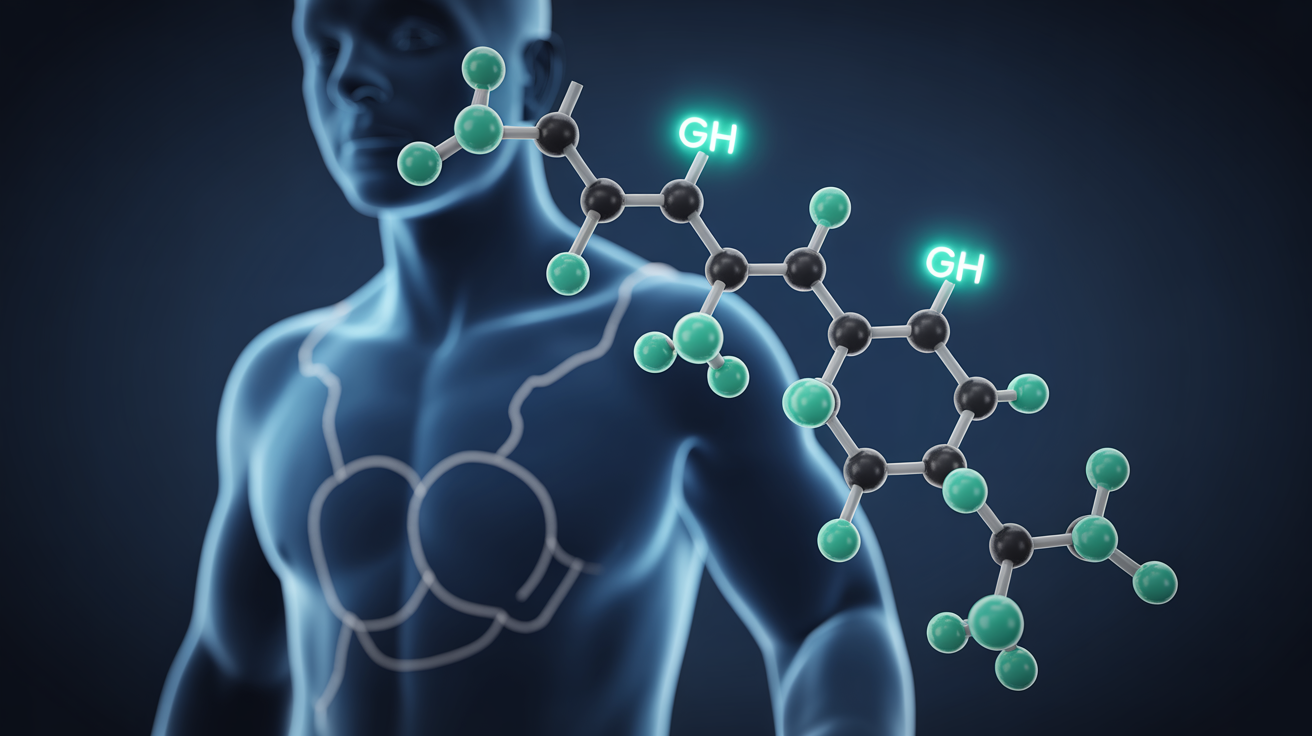
Hexarelin (Examorelin) is a synthetic hexapeptide growth hormone secretagogue that belongs to the Growth Hormone Releasing Peptide (GHRP) family. Among all GHRPs, Hexarelin is considered the most potent in terms of the magnitude of growth hormone release it can stimulate from the pituitary gland.
Developed in the 1990s in Italy, Hexarelin was designed as a more stable and potent analogue of GHRP-6, one of the earlier growth hormone releasing peptides. While it shares the same ghrelin/GHS receptor (GHSR-1a) target as other GHRPs like Ipamorelin and GHRP-2, Hexarelin produces a significantly larger GH pulse, making it a powerful research tool for studying the effects of acute GH elevation.
Beyond its GH-releasing properties, Hexarelin has attracted significant research interest for its cardiovascular effects. Studies have demonstrated cardioprotective properties that appear to be independent of its GH-releasing activity, suggesting that Hexarelin has direct effects on cardiac tissue. This dual profile — potent GH release combined with cardiac protection — makes it a unique compound in the secretagogue field.
What is Hexarelin?
Hexarelin is a synthetic hexapeptide with the amino acid sequence His-D-2-Methyl-Trp-Ala-Trp-D-Phe-Lys-NH₂ and a molecular weight of approximately 887 Da. The incorporation of D-amino acids (D-2-Methyltryptophan and D-Phenylalanine) gives it resistance to enzymatic degradation, contributing to its stability and potency.
Hexarelin acts as an agonist at the growth hormone secretagogue receptor type 1a (GHSR-1a), the same receptor activated by the endogenous hormone ghrelin. However, Hexarelin's binding affinity and the resulting GH release are significantly greater than those of ghrelin or other GHRPs.
In terms of GH release potency, the GHRPs can be ranked approximately as: Hexarelin > GHRP-2 > GHRP-6 > Ipamorelin. However, this greater potency comes with a trade-off in selectivity. While Ipamorelin is highly selective for GH release without affecting other hormones, Hexarelin stimulates not only GH but also cortisol, prolactin, and ACTH to varying degrees.
Hexarelin has a plasma half-life of approximately 60–70 minutes. It can be administered subcutaneously, intranasally, or intravenously. Subcutaneous injection is the most common route in research settings.
Mechanism of Action
Hexarelin exerts its effects through multiple mechanisms, involving both the classical GH secretagogue pathway and direct cardiovascular effects.
GH Release via GHSR-1a: Hexarelin binds to and activates the GHSR-1a receptor on pituitary somatotroph cells, triggering a powerful GH release. The intracellular signalling cascade involves phospholipase C activation, IP3 generation, and calcium mobilisation from intracellular stores. This leads to the rapid exocytosis of GH-containing secretory granules.
Somatostatin Suppression: Like other GHRPs, Hexarelin partially antagonises the effects of somatostatin, the body's natural inhibitor of GH release. This means it can override the body's natural braking mechanism on GH secretion, contributing to its potent GH-releasing effect.
Synergy with GHRH: Hexarelin and GHRH work through different receptors and signalling pathways. When administered together, they produce a synergistic GH release significantly greater than either compound alone.
Cardioprotective Mechanisms (GH-Independent): Research has identified cardiac effects of Hexarelin that are independent of GH release: • Hexarelin binds to CD36 receptors on cardiac tissue, activating cardioprotective pathways • It reduces cardiac fibrosis and inhibits apoptosis (programmed cell death) in cardiac cells • It activates the Akt/eNOS signalling pathway in the heart, promoting nitric oxide production and vasodilation • It has been shown to protect against ischemia-reperfusion injury in animal models
Cortisol and Prolactin Stimulation: Unlike the more selective Ipamorelin, Hexarelin also stimulates the release of cortisol and prolactin, particularly at higher doses. This is mediated through its broader receptor activity and is the primary reason it is considered less selective.
Research Applications
Hexarelin has been studied in both clinical and preclinical settings, with particular focus on GH deficiency and cardiovascular applications.
- Growth Hormone Stimulation Testing: Due to its potent and reliable GH-releasing effect, Hexarelin has been studied as a diagnostic tool for assessing pituitary GH reserve. A single dose can differentiate between GH-deficient and GH-sufficient individuals based on the magnitude of the GH response.
- Cardiac Protection: Hexarelin has demonstrated cardioprotective effects in multiple animal models of cardiac injury. It has been shown to reduce infarct size, improve cardiac function after ischemia-reperfusion injury, and reduce cardiac fibrosis. These effects appear to be mediated through CD36 receptor activation on cardiac cells, independent of GH release.
- Body Composition: Like other GH secretagogues, Hexarelin has been studied for its effects on body composition, showing potential for increasing lean mass and reducing body fat through elevated GH and IGF-1 levels.
- GH Deficiency: Clinical studies in GH-deficient adults and children have demonstrated Hexarelin's ability to significantly elevate GH levels, making it a candidate for GH stimulation therapy.
- Neuroprotection: Emerging research suggests Hexarelin may have neuroprotective effects through its influence on GH/IGF-1 signalling and direct receptor interactions in the brain.
- Desensitisation Research: Hexarelin is also studied for its desensitisation profile. Continuous or very frequent administration leads to a reduction in GH response (tachyphylaxis), making it a useful model for studying receptor desensitisation mechanisms.
Dosage Protocols in Studies
Hexarelin dosage protocols are derived from clinical studies and research literature.
- Subcutaneous Injection: The standard research dose ranges from 100 to 200 mcg per injection, administered 1–3 times daily.
- Diagnostic Testing: For GH stimulation testing, a single dose of 1–2 mcg/kg body weight (typically 100–200 mcg) is administered intravenously, with GH levels measured at intervals over the following 2 hours.
- Timing: As with other GH secretagogues, administration on an empty stomach (at least 2 hours after eating) is recommended to maximise the GH response. Fats and carbohydrates particularly blunt the GH pulse.
- Cycle Considerations: Hexarelin is particularly susceptible to desensitisation with prolonged use. The GH response diminishes significantly after 4–8 weeks of continuous use. Research protocols often employ:
- - Shorter cycles (4–6 weeks) with 4-week breaks
- - Lower dosing frequency (once daily rather than 2–3 times daily)
- - Alternating with other GH secretagogues that produce less desensitisation
- Combination Use: Often studied alongside a GHRH analogue (CJC-1295 without DAC or Sermorelin) for synergistic GH release.
Hexarelin is supplied as a lyophilised powder and reconstituted with bacteriostatic water.
Safety Profile & Considerations
Hexarelin's safety profile reflects its potent but less selective nature compared to Ipamorelin.
Clinical Trial Safety: Hexarelin has been used in clinical studies and is generally well-tolerated at standard research doses. However, its broader hormonal effects require monitoring.
Common Side Effects: • Increased cortisol levels (dose-dependent) • Increased prolactin levels (dose-dependent) • Increased appetite (through ghrelin receptor activation) • Water retention and mild bloating • Injection site reactions • Tingling or numbness in extremities • Mild fatigue or drowsiness
Desensitisation: A significant limitation of Hexarelin is receptor desensitisation. With continuous use, the GH response progressively diminishes. This is more pronounced with Hexarelin than with milder GHRPs like Ipamorelin, limiting the duration of effective use.
Cortisol Concerns: Elevation of cortisol is the most clinically significant side effect compared to more selective GHRPs. Chronic cortisol elevation can have negative effects on metabolism, immune function, and tissue repair. This is why dosing protocols limit the duration of continuous use.
Considerations: • Not recommended for individuals with conditions sensitive to cortisol elevation • Prolactin elevation may be a concern for some individuals • The potent GH release carries the same theoretical concerns regarding tumour growth as other GH secretagogues • Long-term safety data is limited
Canadian Regulatory Context
Hexarelin is not approved by Health Canada for any indication. It is available in Canada as a research chemical only.
Hexarelin has undergone clinical trials in Europe (primarily Italy) for GH deficiency assessment and treatment, but it has not been submitted for regulatory approval in North America. No pharmaceutical product containing Hexarelin is commercially available in any market.
In Canada: • Available through research chemical suppliers for legitimate research purposes • Not available through pharmacies or compounding pharmacies • Not a controlled substance • Banned by WADA under the S2 category (Growth Hormone Releasing Factors), along with all other GHRPs • Quality and purity from research suppliers are unregulated
Compared to Ipamorelin, Hexarelin has less commercial popularity in the Canadian research peptide market due to its less selective profile (cortisol and prolactin elevation) and its tendency toward rapid desensitisation. Researchers interested in GH secretagogues typically prefer Ipamorelin for its cleaner profile or GHRP-2 as a middle ground between potency and selectivity.
Frequently Asked Questions
Why is Hexarelin considered the strongest GHRP?
Hexarelin produces the largest GH pulse among all GHRPs due to its high binding affinity for the GHSR-1a receptor and its structural modifications that enhance receptor activation. However, "strongest" comes with the trade-off of less selectivity — it also raises cortisol and prolactin more than other GHRPs.
Why does Hexarelin cause desensitisation?
Continuous stimulation of the GHSR-1a receptor by Hexarelin leads to receptor downregulation — the pituitary produces fewer receptors in response to constant stimulation. This is a more pronounced effect with Hexarelin than with milder GHRPs, possibly due to the intensity of its receptor activation.
How does Hexarelin compare to Ipamorelin?
Hexarelin produces a larger GH pulse but also raises cortisol and prolactin and desensitises faster. Ipamorelin produces a smaller but cleaner GH pulse with minimal cortisol/prolactin effects and slower desensitisation. Researchers choose based on whether they prioritise maximum GH output (Hexarelin) or selectivity and sustained use (Ipamorelin).
Are the cardioprotective effects of Hexarelin unique?
Among GHRPs, yes. The cardioprotective effects through CD36 receptor activation appear to be relatively specific to Hexarelin's structure. While GH itself has some cardiac benefits, Hexarelin's direct cardiac effects are independent of GH and represent a unique property.
Can Hexarelin be used long-term?
Practically, no. Due to desensitisation, the GH-releasing effect of Hexarelin diminishes significantly after 4–8 weeks of continuous use. Cycling (use for 4–6 weeks, followed by 4+ weeks off) is necessary to maintain responsiveness.
Research Disclaimer
The information presented on this page is for educational and research purposes only. This content does not constitute medical advice, diagnosis, or treatment recommendations. The compounds discussed are investigational and, unless otherwise noted, have not been approved for human therapeutic use by Health Canada or any other regulatory body. Always consult a qualified healthcare professional before considering any new treatment or substance.
Looking for Research-Grade Peptides?
HCR Health provides high-purity, third-party tested research peptides for the Canadian market.
Browse Products at HCR Health