The Science Behind Peptide Stability: Why Proper Storage Changes Everything
Peptides degrade through oxidation, hydrolysis, and aggregation. Understanding the chemistry behind instability helps you prevent it.
Why Peptides Are Inherently Fragile
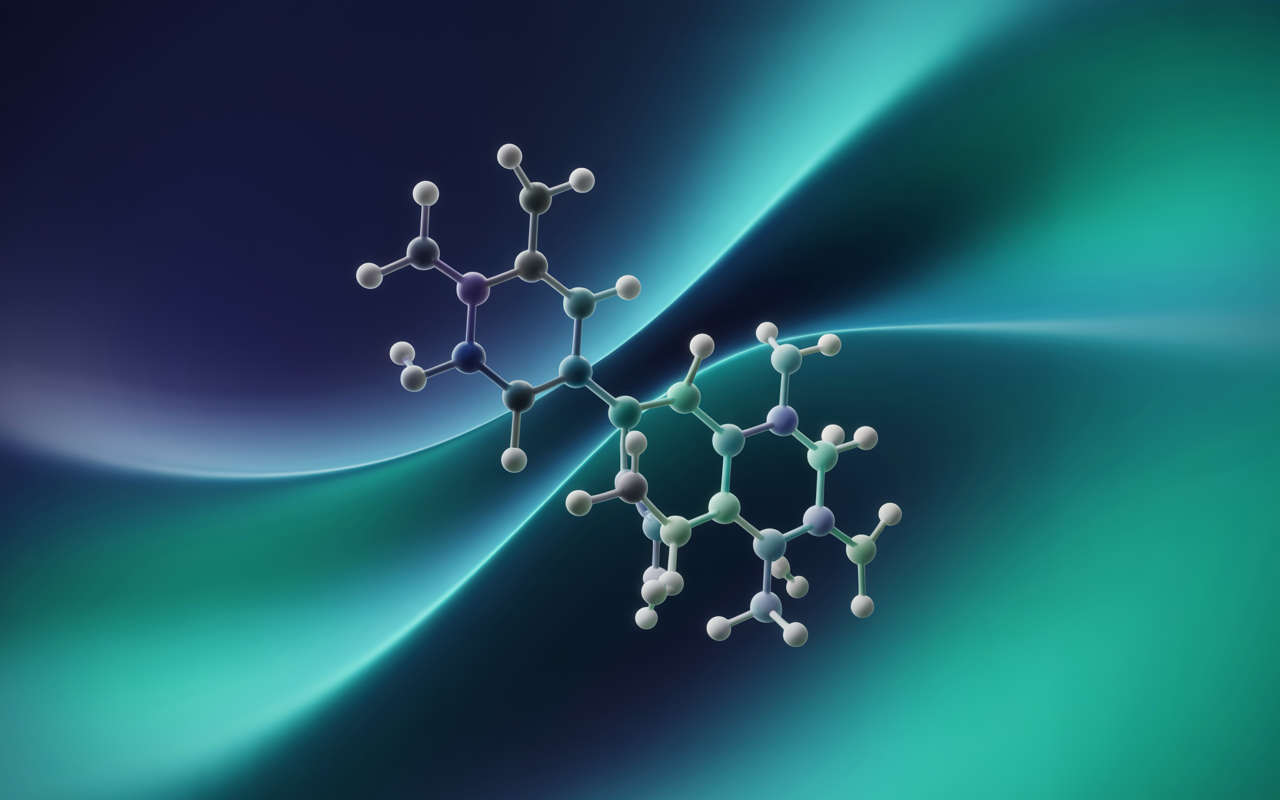
Peptides occupy an awkward middle ground between small-molecule drugs and large proteins. They're big enough to be structurally complex and sensitive to environmental conditions, but too small to benefit from the protective folding strategies that stabilise larger proteins. This makes them uniquely susceptible to degradation.
Understanding the specific chemical pathways through which peptides degrade isn't just academic — it directly informs how you should store, handle, and evaluate your research materials.
The Four Major Degradation Pathways
1. Oxidation
Oxidation is the most common peptide degradation pathway. Amino acids containing sulphur (methionine, cysteine) or aromatic rings (tryptophan, tyrosine, histidine) are particularly vulnerable. When these residues oxidise, the peptide's structure changes, potentially altering its biological activity.
Methionine oxidation is especially problematic because it happens readily at room temperature in the presence of oxygen and light. This is why peptides containing methionine (like many growth hormone-releasing peptides) are particularly sensitive to storage conditions.
Prevention: Store in sealed vials with minimal headspace (less oxygen). Protect from light. Use nitrogen-purged vials when possible.
2. Hydrolysis
Hydrolysis is the breaking of peptide bonds by water. Every peptide bond in a chain is theoretically susceptible, though some are more vulnerable than others. Aspartate (Asp) residues are notorious weak points — the peptide bond adjacent to Asp can cleave spontaneously, particularly at low pH.
This is the primary reason reconstituted peptides have a limited shelf life. The moment water meets peptide, hydrolysis begins. Temperature accelerates the process exponentially — a rough rule of thumb is that reaction rates double for every 10°C increase.
Prevention: Keep reconstituted peptides refrigerated (2-8°C). Use within the recommended timeframe. Lyophilised peptides resist hydrolysis because there's minimal water present.
3. Deamidation
Deamidation is the loss of an amide group from asparagine (Asn) or glutamine (Gln) residues, converting them to aspartate or glutamate respectively. This subtle change alters the peptide's charge and can significantly affect binding affinity and biological activity.
Deamidation is pH-dependent and accelerates at higher pH values (above pH 6). It's also temperature-dependent, making it another reason why cold storage is critical.
Prevention: Store at low temperatures. Be aware that reconstitution buffers with higher pH can accelerate deamidation.
4. Aggregation
Aggregation occurs when peptide molecules clump together, forming dimers, oligomers, or larger insoluble aggregates. This can happen through disulphide bond formation (cysteine-containing peptides), hydrophobic interactions, or simple concentration effects.
Aggregation is particularly insidious because aggregated peptide may appear as cloudiness or particles in solution, but early-stage aggregation is invisible. Aggregated peptides typically lose biological activity and can introduce variability into research results.
Prevention: Avoid high concentrations. Don't freeze reconstituted peptides unless validated. Avoid repeated temperature cycling.
The Temperature-Time Equation
Peptide degradation follows Arrhenius kinetics — the rate of degradation increases exponentially with temperature. At -20°C, most degradation reactions are effectively frozen. At 4°C (refrigerator), they proceed slowly. At 25°C (room temperature), they accelerate significantly. At 37°C and above, degradation can be rapid.
This is why the difference between storing a reconstituted peptide in the fridge versus leaving it on the counter isn't marginal — it can be the difference between weeks of stability and days.
Lyophilisation: Nature's Pause Button
Lyophilisation (freeze-drying) is the reason most research peptides ship as powder rather than solution. By removing water, you eliminate hydrolysis and dramatically slow every other degradation pathway. A properly lyophilised peptide in a sealed vial at -20°C can maintain integrity for years.
The lyophilisation process itself matters, though. Poorly lyophilised peptides may retain residual moisture, reducing their stability advantage. This is one reason why a quality supplier's manufacturing process matters.
Practical Takeaways
- Keep lyophilised peptides frozen (-20°C ideal, -80°C for long-term)
- Reconstitute only what you need — the smaller the reconstituted volume, the faster you'll use it
- Use bacteriostatic water for multi-use vials to prevent microbial growth
- Never leave peptides at room temperature longer than necessary during handling
- Protect from light — especially peptides containing tryptophan, tyrosine, or methionine
- Look for visual changes — cloudiness, particles, or colour changes indicate degradation
For detailed practical storage protocols specific to Canadian conditions, see our storage and handling guide.
Research Disclaimer
The information presented on this page is for educational and research purposes only. This content does not constitute medical advice, diagnosis, or treatment recommendations. The compounds discussed are investigational and, unless otherwise noted, have not been approved for human therapeutic use by Health Canada or any other regulatory body. Always consult a qualified healthcare professional before considering any new treatment or substance.
Looking for Research-Grade Peptides?
HCR Health provides high-purity, third-party tested research peptides for the Canadian market.
Browse Products at HCR Health