Understanding Peptide Purity: Why 98% Isn't Always What You Think
A purity percentage on a COA tells you less than you think. HPLC methodology, TFA salt content, and the nuances that matter for research quality.
The Problem with a Single Number
When you see "98% purity" on a Certificate of Analysis, your instinct is to take it at face value. After all, it's a precise number from an analytical test. But in peptide chemistry, purity percentages are more nuanced than they appear, and understanding these nuances can significantly affect your research outcomes.
What HPLC Purity Actually Measures
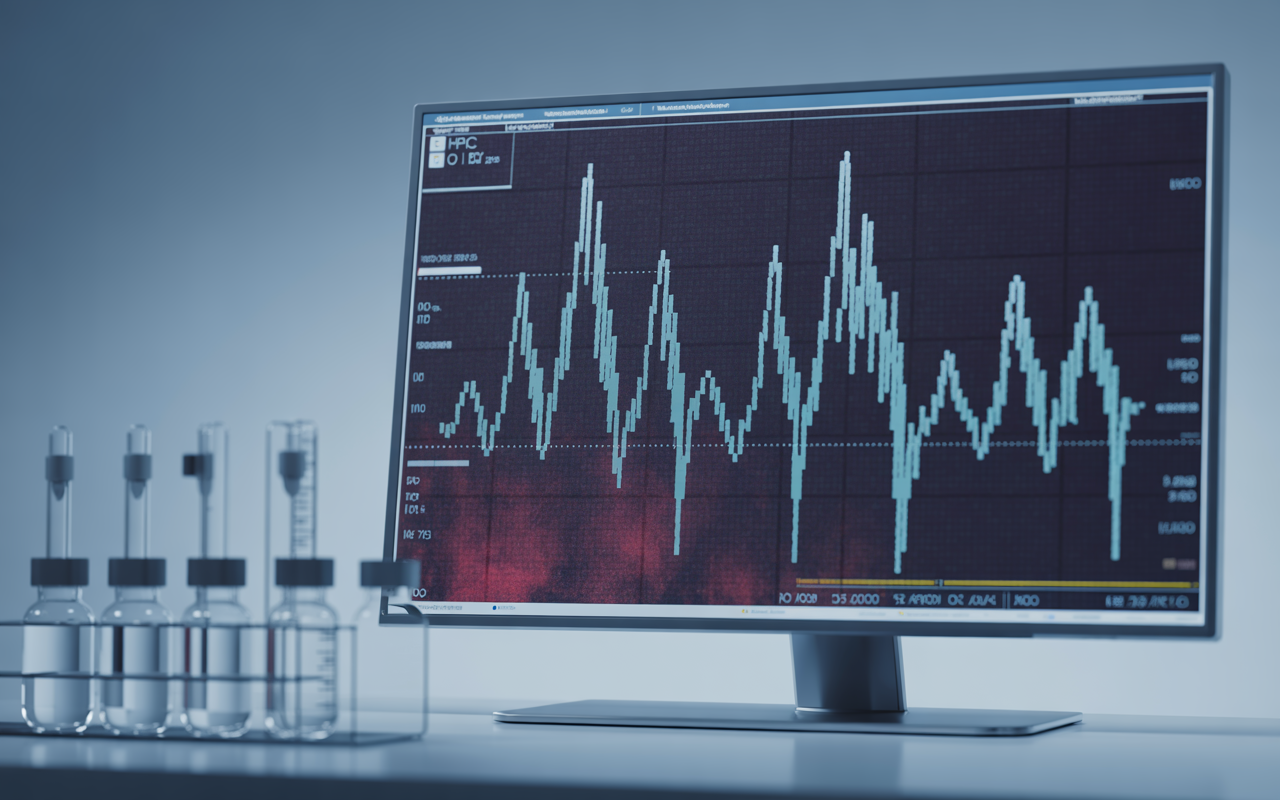
High-Performance Liquid Chromatography (HPLC) separates the components of a sample and measures their relative proportions. When the COA states "98% purity by HPLC," it means that 98% of the UV-absorbing material at the detection wavelength appeared as the main peak, and 2% appeared as other peaks (impurities).
But this measurement depends on several variables:
Detection Wavelength
Most peptide HPLC analysis uses UV detection at 214nm or 220nm. Different wavelengths can give different purity readings for the same sample because different impurities absorb UV light at different intensities. A sample that reads 98% at 214nm might read 96% or 99% at 220nm.
This is why comparing purity numbers across different suppliers is unreliable unless you know they used identical methodology.
Gradient Conditions
The HPLC gradient (the rate at which the mobile phase composition changes during the run) affects peak separation. A steep gradient may cause impurity peaks to merge with the main peak, artificially inflating the apparent purity. A slower, more resolving gradient provides better separation and a more honest picture.
Reputable analytical labs use validated methods with gradients optimised for the specific peptide being analysed.
Column Chemistry
Different HPLC columns (C18, C8, phenyl) can produce different purity readings for the same sample. C18 columns are the most common for peptide analysis, but even within C18 columns, different manufacturers and pore sizes affect results.
The TFA Salt Factor
Here's a factor that most researchers overlook: the weight contribution of trifluoroacetic acid (TFA) counterions.
During peptide synthesis, TFA is used in the cleavage step. The final peptide product typically retains TFA as a counterion, associated with basic amino acid residues (lysine, arginine, histidine). This TFA adds weight to the product but isn't the peptide itself.
For a peptide like BPC-157, TFA content can represent 15-30% of the total weight of the vial contents. This means your "5mg" vial of BPC-157 might contain only 3.5-4.25mg of actual peptide, with the rest being TFA salt.
Some suppliers specify "5mg peptide content" (net peptide weight, excluding TFA) while others specify "5mg gross weight" (including TFA). The difference is significant for dosing accuracy.
How to tell: Look for "TFA salt" or "net peptide content" designations on the product label or COA. If neither is specified, assume gross weight (including TFA).
What the 2% Impurities Actually Are
The impurities in a 98% pure peptide can include:
- Deletion sequences — peptides missing one or more amino acids from the synthesis
- Truncated sequences — incomplete synthesis products
- Oxidised peptide — the correct sequence but with oxidised methionine or cysteine residues
- D-amino acid substitutions — where an L-amino acid was replaced by its mirror image during synthesis
- Deamidated peptide — asparagine or glutamine residues that have lost their amide group
Not all impurities are equal. A deletion sequence (wrong peptide entirely) is a more serious contaminant than an oxidised version of the correct peptide. The HPLC percentage alone doesn't tell you what the impurities are — you need mass spectrometry and potentially amino acid analysis for that.
Practical Implications
So what should you actually look for when evaluating peptide quality?
- Request the full chromatogram, not just the percentage. A clean chromatogram with one sharp dominant peak and tiny, well-separated minor peaks is more informative than a number.
- Check the methodology — wavelength, column, gradient should be listed. Consistent methodology across batches is a good sign.
- Confirm identity with mass spectrometry — purity without identity confirmation is incomplete. The HPLC might show 98% of one peak, but MS confirms it's actually your peptide.
- Understand TFA content — ask the supplier whether the stated weight is net peptide or includes TFA counterions.
- Consider the application — for basic research, 95-98% may be perfectly adequate. For quantitative studies requiring precise dosing, higher purity with known TFA content is important.
The Diminishing Returns of Ultra-High Purity
Is 99.5% purity meaningfully better than 98%? For most research applications, no. The cost premium for ultra-high purity peptides is substantial, and the practical benefit is marginal unless you're doing highly quantitative work where the 1-2% impurity could confound results.
The exception is when the impurities are biologically active. If a 2% impurity is a related peptide with its own biological effects, even small amounts could confound your results. This is where knowing what the impurities are (via MS analysis) matters more than the absolute purity percentage.
For more on reading and evaluating COAs, see our complete COA guide.
Research Disclaimer
The information presented on this page is for educational and research purposes only. This content does not constitute medical advice, diagnosis, or treatment recommendations. The compounds discussed are investigational and, unless otherwise noted, have not been approved for human therapeutic use by Health Canada or any other regulatory body. Always consult a qualified healthcare professional before considering any new treatment or substance.
Looking for Research-Grade Peptides?
HCR Health provides high-purity, third-party tested research peptides for the Canadian market.
Browse Products at HCR Health