The Blood-Brain Barrier and Peptide Research: Why It Matters
Most peptides can't cross the blood-brain barrier. Understanding why — and which ones can — is fundamental to neurological peptide research.
The BBB: Biology's Firewall
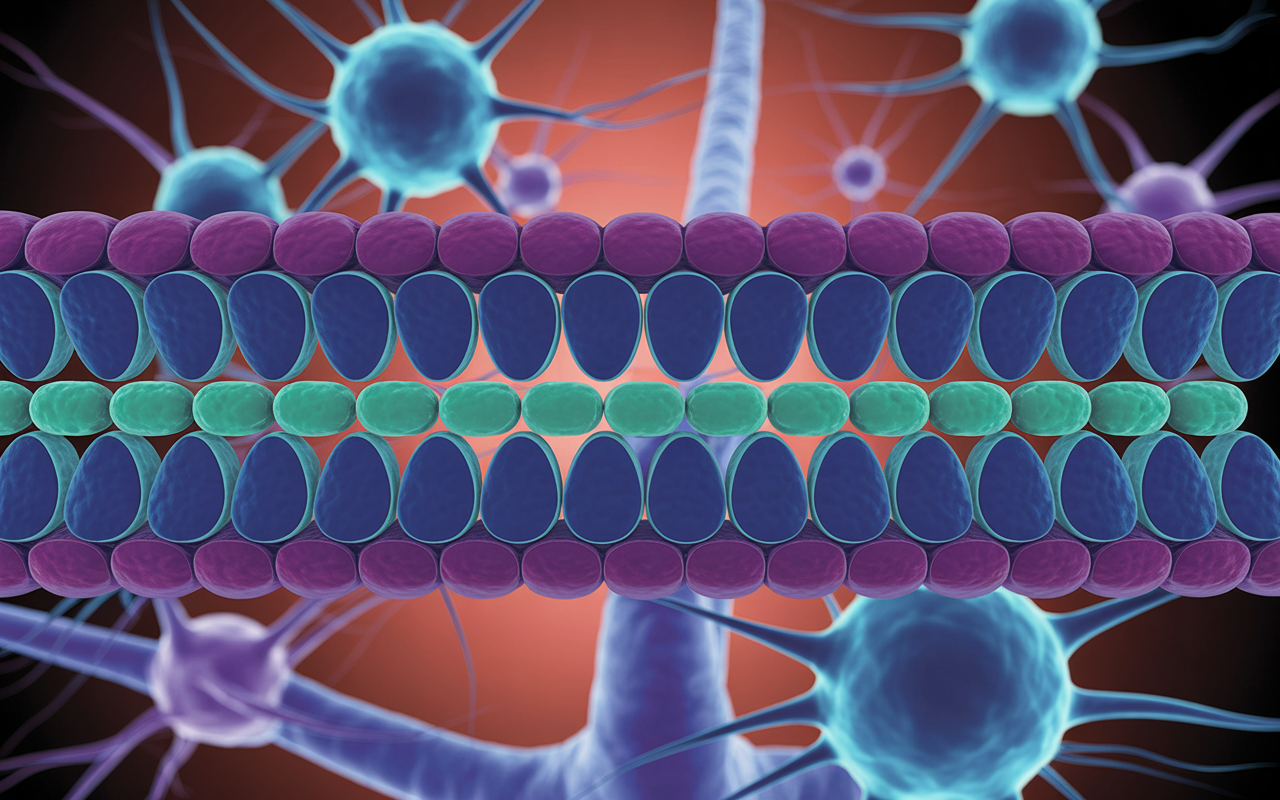
The blood-brain barrier (BBB) is one of the most selective barriers in the human body. Formed by specialised endothelial cells with tight junctions, supported by astrocyte foot processes and pericytes, it controls what enters the central nervous system with remarkable precision.
For peptide researchers, the BBB represents both a fundamental challenge and a fascinating research frontier. Most peptides cannot cross the BBB, which limits their potential neurological applications. Understanding why — and what exceptions exist — is essential for anyone working in neuroactive peptide research.
Why Most Peptides Can't Cross
The BBB blocks peptides through several mechanisms:
- Size exclusion: The tight junctions between endothelial cells have a molecular weight cutoff of roughly 400-500 Daltons for passive diffusion. Most research peptides (BPC-157 at ~1,420 Da, TB-500 at ~4,960 Da) are far too large.
- Polarity: Peptides are generally hydrophilic (water-loving) due to their peptide bonds and charged amino acid residues. The BBB lipid bilayer favours lipophilic (fat-soluble) molecules.
- Enzymatic degradation: The BBB contains peptidases that actively degrade peptides attempting to cross, creating an enzymatic barrier in addition to the physical one.
- Efflux transporters: P-glycoprotein and other efflux pumps actively transport certain molecules back into the blood even if they manage partial penetration.
Peptides That Can Cross (and How)
Despite these barriers, some peptides do access the CNS. The mechanisms include:
Receptor-Mediated Transcytosis Some peptides bind to receptors on the luminal (blood) side of the BBB endothelium, triggering internalisation and transport across the cell to the abluminal (brain) side. Insulin and transferrin use this pathway, and researchers are exploring ways to exploit it for peptide drug delivery.
Small Peptide Transporters Very small peptides (di- and tripeptides) can use peptide transporters like PEPT1 and PEPT2 that are present on the BBB. **GHK-Cu** (a tripeptide, ~404 Da with copper) is one of the smallest research peptides and may use these transporters, though evidence is limited.
Circumventricular Organs Certain brain regions lack a complete BBB — the circumventricular organs (CVOs) including the area postrema, median eminence, and pineal gland. Peptides can access these regions more readily. **[DSIP](/peptides/dsip)** (Delta Sleep-Inducing Peptide) may exert some of its effects through CVOs.
Intranasal Delivery The nasal cavity provides a potential BBB bypass through the olfactory and trigeminal nerve pathways. **[Selank](/peptides/selank)** is specifically designed for intranasal delivery, with evidence suggesting direct nose-to-brain transport via these neural pathways.
Indirect CNS Effects Some peptides affect the brain without crossing the BBB at all. **BPC-157** appears to influence central nervous system function through the vagus nerve and gut-brain axis rather than direct BBB penetration. This indirect pathway is increasingly recognised as a significant mechanism for gut-derived peptides.
Research Strategies for BBB Penetration
Researchers are exploring several strategies to enhance peptide BBB penetration:
- Lipidation: Attaching fatty acid chains to increase lipophilicity
- Cell-penetrating peptide conjugates: Attaching sequences like TAT or penetratin that facilitate membrane crossing
- Nanoparticle encapsulation: Packaging peptides in lipid nanoparticles or polymeric carriers
- Focused ultrasound: Temporarily disrupting the BBB in targeted regions using focused ultrasound with microbubbles
- Receptor-targeting conjugates: Engineering peptides to hijack existing transcytosis pathways
Implications for Common Research Peptides
- Selank: Designed for intranasal delivery specifically to bypass the BBB. Has the most direct CNS research relevance.
- DSIP: Small enough for potential partial BBB access, may act through circumventricular organs.
- BPC-157: Likely acts on the CNS indirectly via vagal pathways and the gut-brain axis rather than direct penetration.
- Epithalon: Small tetrapeptide, but evidence for BBB crossing is limited.
- Semaglutide: GLP-1 receptors exist in the brain, and semaglutide appears to access them — possibly through circumventricular organs or receptor-mediated transcytosis. This is an active area of investigation.
Why This Matters for Research Design
Understanding BBB penetration is critical for experimental design. If your peptide doesn't cross the BBB, measuring CNS endpoints after peripheral administration requires careful interpretation. Any observed CNS effects must be attributed to indirect mechanisms rather than direct central action, which has different implications for dose-response relationships and timing.
For more on how peptides interact with cellular systems, see our guide on how peptides work.
Research Disclaimer
The information presented on this page is for educational and research purposes only. This content does not constitute medical advice, diagnosis, or treatment recommendations. The compounds discussed are investigational and, unless otherwise noted, have not been approved for human therapeutic use by Health Canada or any other regulatory body. Always consult a qualified healthcare professional before considering any new treatment or substance.
Looking for Research-Grade Peptides?
HCR Health provides high-purity, third-party tested research peptides for the Canadian market.
Browse Products at HCR Health